Introduction
Do you want soft, effortless waves but worry that your fine hair will fall flat within an hour? You are not alone. Creating beach waves fine hair can feel tricky because fine strands often lack natural volume and can become weighed down by heavy products. The good news is that you do not need thick hair to create beautiful beachy texture.
With the right preparation, styling technique, temperature, and lightweight products, you can create waves that look fuller without making your hair stiff or greasy. This guide explains how to create beach waves fine hair at home, which tools work best, how to make waves last longer, and which common mistakes can ruin your style.
You will also learn how different methods compare, including a curling iron, flat iron, heatless styling, and sea salt spray. Whether your hair is straight, slightly wavy, short, or long, you can adapt these techniques to your routine.
What Is the Best Way to Create Beach Waves on Fine Hair?
The best method for beach waves fine hair is usually a lightweight styling routine combined with a small curling iron or flat iron. Work with small sections, use moderate heat, and allow each wave to cool before touching it.
For the most natural result:
- Start with completely dry hair.
- Apply a lightweight heat protectant.
- Divide your hair into manageable sections.
- Curl small sections away from your face.
- Leave the ends slightly straighter.
- Let the curls cool completely.
- Gently separate the waves with your fingers.
- Finish with a light flexible hairspray.
This method creates texture without placing too much weight on fine strands.
Why Fine Hair Needs a Different Beach Wave Technique
Fine hair has a smaller individual strand diameter than coarse hair. It can therefore lose shape quickly when exposed to humidity, brushing, or heavy styling products.
Fine hair can also become oily faster because excess product sits close to the scalp and strands. That makes product selection especially important.
Instead of using several rich products, focus on lightweight formulas that provide texture and hold.
Key things fine hair needs
- Lightweight volume
- Heat protection
- Flexible hold
- Texture without excessive moisture
- Proper cooling time
- Minimal brushing
The goal is not to make every strand feel coated. The goal is to create structure while keeping the hair light.
How to Create Beach Waves on Fine Hair Step by Step
1. Start With the Right Foundation
Freshly washed hair can sometimes be too slippery for styling. If your hair becomes oily quickly, use a lightweight volumizing shampoo and conditioner.
Avoid applying conditioner directly to the roots. Concentrate it on the mid lengths and ends.
If your hair feels extremely soft after washing, a small amount of lightweight mousse can provide extra grip.
2. Dry Your Hair Completely
Never curl damp hair with a traditional curling iron. Water trapped inside the hair can increase heat damage.
Dry your hair fully before styling. You can use a round brush during blow drying if you want additional root lift. source: My Kind of Sweet
For extra volume, gently lift your roots while drying instead of pressing the hair flat against your scalp.
3. Choose the Right Tool
For fine hair, a curling iron around 1 inch to 1.25 inches can create defined waves that relax into a beachy shape.
A flat iron can also work well because it creates a less uniform wave. This often looks more natural.
Popular styling tool brands include Dyson, ghd, T3, BaByliss, and Hot Tools. The brand matters less than using a suitable temperature and technique for your hair.
4. Use Moderate Heat
Fine hair generally does not need extremely high temperatures.
A practical starting range is around 300°F to 350°F. You can adjust based on how your hair responds.
If your hair holds a curl easily, use less heat. If the wave disappears quickly, improve your technique and cooling time before simply increasing the temperature.
5. Curl Away From Your Face
Take a small section and wrap it around the barrel. Leave the final inch or two of the ends outside the tool.
This small detail makes the finished style look more relaxed and natural.
Alternate the direction of some waves through the back sections. This prevents the hair from looking like one large uniform curl.
6. Let the Waves Cool
Cooling is one of the most overlooked steps.
A freshly heated curl is flexible. As it cools, the hair sets into its new shape.
Do not immediately brush or pull apart the waves. Give them several minutes to cool before styling them with your fingers.
Best Products for Beach Waves on Fine Hair
The best products for beach waves fine hair should add texture without creating unnecessary weight.
| Product Type | Main Benefit | Best Use |
|---|---|---|
| Volumizing mousse | Adds body and grip | Before blow drying |
| Heat protectant | Helps reduce heat related damage | Before hot tools |
| Sea salt spray | Adds texture | For a relaxed finish |
| Texturizing spray | Adds volume and separation | After styling |
| Dry shampoo | Adds grip and freshness | On roots |
| Flexible hairspray | Helps hold the shape | Final step |
Sea Salt Spray
Sea salt spray can create a classic beachy texture. However, too much can make fine hair feel dry or stiff.
Start with a small amount. Spray mainly through the mid lengths and ends rather than soaking the hair.
Texturizing Spray
A lightweight texturizing spray can be especially useful when your hair becomes flat quickly. It can add separation without the heavier feel of some creams and oils.
Can You Create Beach Waves Without Heat?
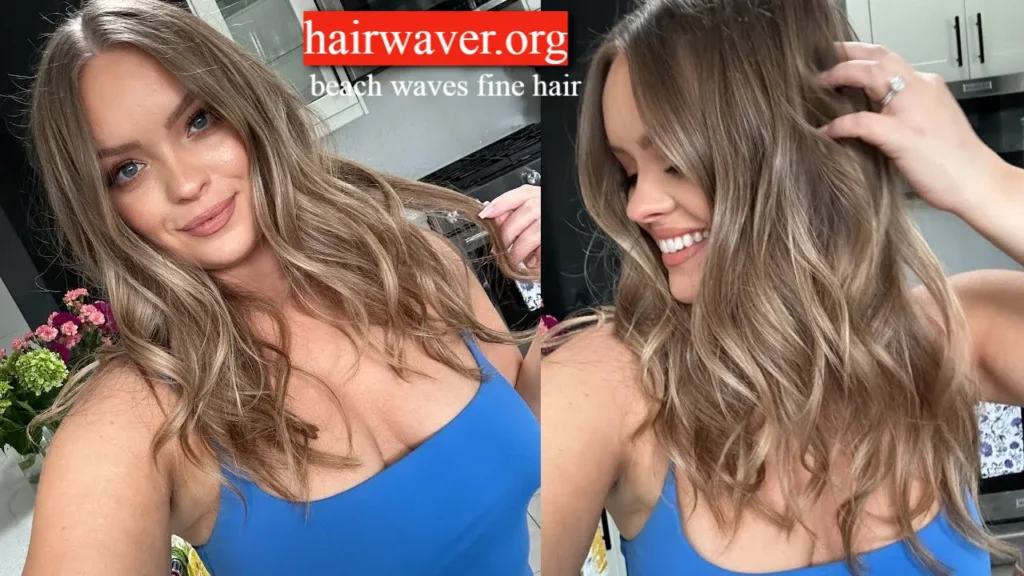
Yes. Heatless styling can work surprisingly well for fine hair, especially when you want to reduce frequent heat exposure.
One simple technique is to create loose braids on slightly damp hair. Allow the hair to dry completely before releasing the braids.
You can also use a soft robe belt or heatless curling band. Keep the sections loose rather than tightly wrapping the hair.
The result usually looks softer and less polished than a curling iron. That can actually make the style look more naturally beachy.
How to Make Beach Waves Last Longer
If your waves disappear quickly, the problem may not be your curling tool. Your preparation and finishing routine also matter.
Try these techniques: source: Facebook · Elle Leary Artistry
- Avoid heavy conditioner near the roots.
- Use lightweight mousse before styling.
- Curl smaller sections.
- Hold each curl briefly instead of overheating it.
- Let every curl cool completely.
- Avoid brushing immediately after styling.
- Add light texture spray after separating the waves.
- Finish with flexible hairspray.
Humidity can also affect how long waves last. If you live somewhere humid, a humidity resistant finishing spray can help maintain the shape.
Common Mistakes to Avoid
Creating beach waves fine hair does not require complicated styling, but several mistakes can make your results disappointing.
Using Too Much Product
More product does not always mean more hold. Fine hair can quickly become heavy and flat.
Use small amounts and add more only when necessary.
Using Extremely High Heat
High heat may create a stronger curl temporarily, but repeated excessive heat can contribute to damage.
Start with moderate heat and focus on technique.
Making Every Curl the Same
Perfectly identical curls can look more like a traditional curled hairstyle than beach waves.
Alternate directions and leave some ends straight for a relaxed appearance.
Brushing Too Much
A brush can remove the texture you worked hard to create.
Use your fingers to gently separate the waves instead.
Curling Large Sections
Large sections may not receive enough heat evenly. They can also lose their shape faster.
Smaller sections usually provide better control for fine hair.
Beach Waves Fine Hair: Quick Comparison of Methods
| Method | Volume | Hold | Natural Look | Heat |
|---|---|---|---|---|
| Curling iron | High | High | High | Yes |
| Flat iron | Medium | High | Very high | Yes |
| Sea salt spray | Medium | Medium | Very high | No |
| Braids | Medium | Medium | High | No |
| Heatless curling band | Medium | Medium | High | No |
If you want the strongest hold, a curling iron or flat iron usually performs best. If you want minimal heat, braids or a heatless curling method can be a better choice.
Expert Tips for Better Results
Professional hairstylists commonly emphasize preparation, section size, and cooling when creating lasting waves.
One of the most useful principles is simple: fine hair does not need more heat just because it struggles to hold a curl.
Instead, improve the foundation first.
Use clean sections, apply a small amount of styling product, create controlled waves, and let them cool completely. This approach can improve longevity without unnecessarily increasing heat exposure.
Frequently Asked Questions
Can fine hair have beach waves?
Yes. Fine hair can hold beach waves when you use lightweight styling products, suitable heat, small sections, and enough cooling time.
What size curling iron is best for fine hair?
A 1 inch to 1.25 inch curling iron is a useful starting point. Smaller barrels can create stronger waves that relax naturally.
Should you use sea salt spray on fine hair?
Yes, but use it sparingly. Too much sea salt spray can make fine hair feel dry, rough, or stiff.
How do I make beach waves stay in fine hair?
Use lightweight mousse, curl smaller sections, allow the waves to cool, avoid excessive brushing, and finish with flexible hairspray.
Are beach waves damaging to fine hair?
Heat styling can contribute to damage when used excessively or at very high temperatures. Always use heat protection and choose a moderate temperature.
Can I create beach waves without heat?
Yes. Braids, twists, and heatless curling bands can create soft waves without hot tools.
Why do my waves fall out so quickly?
Fine hair may have less natural structure for holding a curl. Heavy products, excess conditioner, humidity, large sections, and touching the hair too soon can also reduce hold.
Is a flat iron good for fine hair?
A flat iron can create attractive beach waves, especially when you want an uneven and relaxed shape. Use moderate heat and avoid repeatedly passing over the same section.
Conclusion
Creating beach waves fine hair is easier when you stop trying to force your hair into a heavy, dramatic curl. Fine strands usually respond better to lightweight products, controlled heat, smaller sections, and proper cooling.
A curling iron can give you stronger definition, while a flat iron can create a more natural wave. Heatless methods are useful when you want to reduce heat styling. Sea salt spray and texturizing spray can also add the grip and separation that fine hair often needs.
The most important lesson is to keep your routine simple. Protect your hair, use less product, focus on technique, and give your waves time to set.
Try one method at a time and see how your hair responds. Which beach wave technique works best for your fine hair?
About the Author: Johan Harwen The author is a beauty and hair care content writer who focuses on practical styling techniques, product education, and easy routines. Their goal is to make professional looking hair advice simple and useful for everyday readers.
email: johanharwen@314gmail.com
Author Name: Johan Harwen