
Introduction
Let’s be honest: the moment you spot that first silver strand, your brain goes into full panic mode. Do you cover it? Embrace it? Call your colorist at 9 PM on a Sunday?
If you have been thinking about transitioning to grey hair with highlights, you are not alone. Millions of women every year decide to ditch the dye and let their natural silver shine through. And the truth is, when you do it the right way, the result is absolutely stunning.
This article walks you through everything you need to know. You will learn how highlights make the transition smoother, which techniques work best for your hair type, how to care for your silver strands, and how to avoid the one mistake that makes the grow-out look terrible instead of gorgeous.
Whether you are just starting to think about it or you already have two inches of roots showing, this guide is for you.
Why So Many Women Are Choosing to Go Grey Right Now
Grey hair is having a serious moment. Celebrities, influencers, and everyday women are embracing their natural silver, and the look is powerful. It is bold, it is confident, and frankly, it is much healthier for your hair in the long run.
According to a survey by the Professional Beauty Association, more than 40% of women over 40 say they have considered stopping hair coloring in the last few years. The number keeps climbing. Social media has played a huge role in this shift. Hashtags like #silversisters and #greyhairmovement have millions of followers who share their progress, celebrate their grey, and support each other through the transition.
But here is the thing most people do not tell you: going grey cold turkey can look harsh and unflattering if you do not plan it right. That is exactly where highlights come in.
How Highlights Make the Grey Transition So Much Easier
Highlights are the secret weapon of anyone transitioning to grey hair with highlights. They blend your natural grey with your existing color, so the line of demarcation (that hard contrast between your grey roots and colored ends) becomes soft and barely noticeable.
Think of it this way. Without highlights, your grow-out looks like a clear before-and-after photo. With highlights, it looks intentional, like you paid someone a lot of money to make your hair look effortlessly dimensional.
Here is what highlights actually do during the transition:
- They lighten your existing dyed hair to match your incoming grey roots more closely.
- They break up the solid line where grey meets color.
- They add texture and dimension so your hair looks full and healthy.
- They make each stage of the grow-out feel like its own polished look.
This approach also gives your hair a chance to recover. Years of coloring can leave hair dry, brittle, and damaged. Letting it grow out while using strategic highlights means less chemical processing over time.
The Best Highlight Techniques for Going Grey
Not all highlight techniques are created equal when it comes to a grey transition. Some work beautifully. Others can actually make things look worse. Here is a breakdown of the most popular options.
Babylights
Babylights are ultra-fine highlights that mimic the natural variation of color you see in children’s hair. They are placed throughout the hair in very thin sections, which creates an incredibly natural blend.
For grey transitions, babylights are one of the best choices because they soften the root line so gradually that most people cannot even tell where your grey starts and your dyed hair ends. This technique works especially well if your natural grey is coming in at a lighter shade of silver or white.
Balayage
Balayage is a freehand painting technique that creates a gradual lightening effect from roots to ends. It has been one of the most popular coloring methods for years, and it works exceptionally well for grey transitions.
With balayage, your stylist can paint lighter tones through the mid-lengths and ends of your hair. This pulls the color away from the roots, making your grey grow-in look soft and intentional rather than neglected. The result is a sun-kissed, dimensional finish that looks gorgeous on grey and silver hair.
Foilayage
Foilayage combines the precision of foils with the natural blending of balayage. It gives your stylist more control over placement and lift, which is helpful if you have very dark hair and need more dramatic lightening to match your grey.
This technique is particularly effective if your natural color is deep brown or black and your grey is coming in as bright white or silver. The contrast between dark ends and light roots can be jarring without the right blending, and foilayage handles it beautifully.
Money Piece
A money piece is a bold framing highlight placed around the face. It draws attention away from the root area and toward your features instead. Many women going grey use a money piece as a way to ease into lighter color around the face before committing to full-head highlights.
If your grey is coming in concentrated around the temples and hairline (which is extremely common), a money piece can make it look styled and intentional from day one.
How Long Does the Grey Transition Actually Take?
This is the question everyone wants answered. The honest answer is: it depends.
Hair grows about half an inch per month on average. If your hair is shoulder length, a full transition could take anywhere from 18 months to 3 years. If your hair is short, you might be fully grey in 12 months or less.
Here is a rough timeline most women experience:
- Months 1 to 3: The grow-out begins. Root contrast is noticeable. This is when most people want to give up. Do not. Start your highlight strategy now.
- Months 4 to 8: You have a few inches of grey coming in. Highlights are doing their job. The blend looks much better. Keep going.
- Months 9 to 14: You are more than halfway there. Your grey is prominent. People start noticing and complimenting you.
- Months 15 to 24: Final stage. You are almost fully transitioned. A final trim or cut often removes the last of the old color.
The key is that every stage looks intentional when you use highlights consistently throughout the process.
Finding the Right Colorist for Your Grey Transition
This step matters more than most people realize. Not every colorist has experience with grey transitions. Some will try to talk you out of it. Others may not know the right techniques to blend your specific grey pattern with your existing color.
When you book your first consultation, ask these questions directly:
- Have you worked with clients going through a grey transition before?
- What technique do you recommend for my hair type and grey pattern?
- How many sessions do you think the process will take?
- What toning treatments do you use to keep grey hair from looking yellow or brassy?
A good colorist will welcome these questions. They will look at your hair in natural light, assess your grey pattern, and build a customized plan. Do not skip this consultation. It will save you a lot of time, money, and frustration.
Toning: The Step Everyone Forgets
Grey and silver hair has a tendency to pick up warm, yellow, or brassy tones over time. This happens because of heat styling, sun exposure, hard water, and mineral buildup. If you skip toning, your beautiful silver can look dingy and dull.
Purple or violet shampoos and conditioners neutralize brassiness by depositing cool pigment. Use a purple shampoo once or twice a week, not every wash. Over-toning can leave your hair looking lavender, which may or may not be what you are going for.
Glossing treatments done at the salon can also add a luminous, glass-like finish to grey hair. Many stylists recommend a clear or violet gloss every 6 to 8 weeks to keep your silver looking fresh and vibrant.
Caring for Grey Hair During and After the Transition
Grey hair has a different texture than pigmented hair. It tends to be coarser, drier, and more porous. This means it needs extra moisture and protection.
Here is what your haircare routine should include during a grey transition:
- Deep conditioning mask: Use once a week. Look for masks with ingredients like keratin, argan oil, or shea butter.
- Leave-in conditioner: Apply after every wash to lock in moisture and reduce frizz.
- Heat protectant: Always. Grey hair is more vulnerable to heat damage.
- Scalp care: A healthy scalp supports healthy hair growth. Use a gentle, sulfate-free shampoo.
- Silk or satin pillowcase: It reduces friction and helps prevent breakage while you sleep.
Also, trim your hair regularly during the transition. Getting a trim every 8 to 10 weeks removes the most damaged ends and keeps your hair looking healthy as it grows out.
Should You Cut Your Hair Short for the Transition?
Some women choose to cut their hair short or even do a big chop during their grey transition. It dramatically speeds up the process. If your hair is long and you cut it to chin length, for example, you might cut your transition time in half.
That said, you absolutely do not have to cut your hair short. Many women successfully transition with long hair using highlights and regular trims. It just takes longer.
If you are on the fence, consider starting with a haircut that removes the most damaged ends without going dramatically short. A lob (long bob) or shoulder-length cut is a great middle ground. It removes a lot of the old color without requiring a big commitment to short hair.
Common Mistakes to Avoid
Transitioning to grey hair with highlights is a process, and a few common mistakes can slow things down or make the grow-out look sloppy.
Going too light too fast. If your natural color is dark, trying to lighten it dramatically in one session can cause breakage. Work with your colorist to lift gradually over multiple appointments.
Skipping toner. Yellow, brassy tones will make your grey look faded and dull. Toning is not optional.
Using the wrong shampoo. Sulfate-heavy shampoos strip moisture and can cause grey hair to look dull and frizzy. Switch to a sulfate-free, moisturizing formula.
Not committing mentally. The middle stage of a grey transition is the hardest. Your hair looks like a work in progress. This is completely normal. If you bail at month four, you never get to the beautiful part.
Comparing your grey to someone else’s. Every person’s grey is unique. Some people go full silver. Others get salt-and-pepper. Some get a gorgeous white streak at the front. Your grey is yours, and it deserves to be embraced on its own terms.
What to Expect Emotionally
Nobody talks about this part, but it is real. Going grey is as much an emotional transition as it is a physical one.
For many women, hair color has been tied to identity for decades. You may have been coloring your hair since your twenties. Watching your grey grow in can stir up feelings about aging, appearance, and what “looking good” means at different stages of life.
Give yourself grace through this process. Some days you will feel fabulous and powerful. Other days you might want to grab a box of color from the drugstore. That is okay. It is a process. The best thing you can do is surround yourself with people (and online communities) who support your decision and celebrate every milestone.
The Final Look: What Grey Hair with Highlights Actually Looks Like
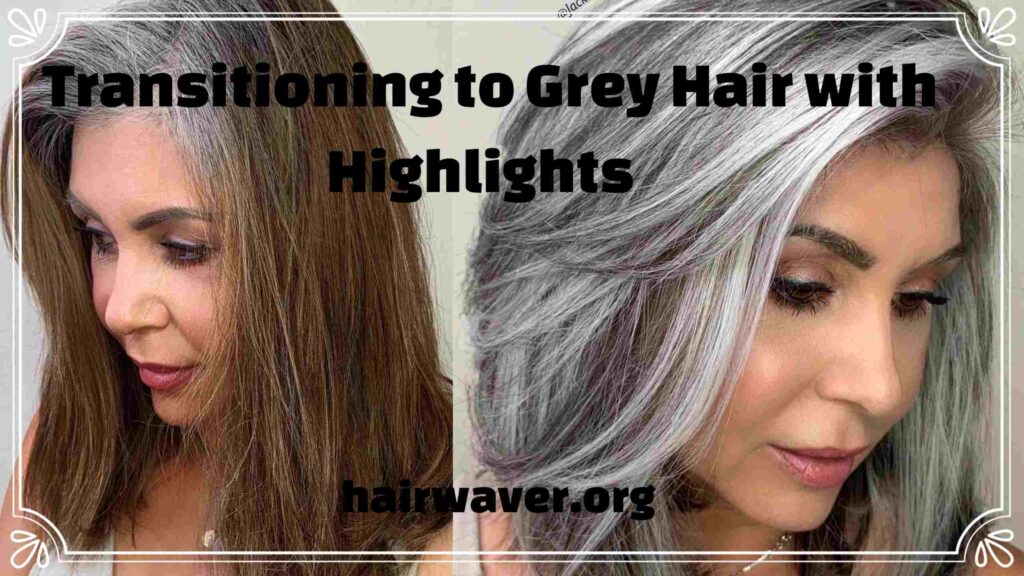
Once you are fully transitioned, grey hair with subtle highlights is one of the most striking looks out there. The highlights prevent your grey from looking flat or one-dimensional. They catch the light and give your hair a natural depth that solid grey simply cannot achieve.
Many women find that after their full transition, they continue to add the occasional toning highlight or gloss just to keep things looking polished. This is much less maintenance than full-color appointments every 4 to 6 weeks, and it is infinitely better for the health of your hair.
Conclusion
Transitioning to grey hair with highlights is one of the most rewarding hair journeys you can take. Yes, it requires patience. Yes, there will be awkward stages. But the end result is a look that is uniquely, authentically yours.
You do not have to do it all at once. Start with a consultation, choose the right highlight technique, take care of your hair through every stage, and trust the process. The women who commit to it almost always say they wish they had started sooner.
So here is my question for you: what is holding you back from going grey? Is it the grow-out phase, the fear of looking older, or something else entirely? Drop a comment, share this article with someone who is on the fence, or better yet, book that consultation today. Your silver era is waiting.
Frequently Asked Questions
1. What highlights work best for transitioning to grey hair? Babylights and balayage are the most popular and effective techniques. They create a soft, natural blend between your grey roots and your existing color, making each stage of the grow-out look intentional.
2. How long does it take to fully transition to grey hair with highlights? It depends on your hair length and growth rate. Most women take 12 to 24 months. Using highlights throughout the process makes every stage look polished rather than in-between.
3. Does going grey with highlights damage your hair? Any chemical process carries some risk. However, using highlights instead of full color actually reduces the amount of processing your hair receives overall, which is better for its long-term health.
4. Can I transition to grey hair without cutting it short? Yes, absolutely. You can keep your hair long throughout the process. Regular trims (every 8 to 10 weeks) will remove damaged ends and keep things looking neat.
5. Will my grey hair look yellow or brassy? It can, especially over time. Using a purple or violet shampoo once or twice a week and getting regular toning treatments at the salon will keep your grey looking cool, bright, and beautiful.
6. How often should I see my colorist during the transition? Most stylists recommend coming in every 8 to 12 weeks for touch-up highlights and toning. This keeps the blend looking fresh without over-processing your hair.
7. What is the hardest part of transitioning to grey hair? Most women say months 3 to 8 are the hardest. The contrast between grey roots and colored ends is most visible during this phase. Staying consistent with your highlight appointments makes this stage much easier to get through.
8. Should I use special products for grey hair? Yes. Use a sulfate-free shampoo, a purple toning shampoo once or twice a week, a deep conditioning mask weekly, and a leave-in conditioner after every wash. Grey hair is more porous and needs extra moisture.
9. Can I do anything at home to make the transition look better? Yes. Root touch-up sprays and powders in silver or grey can blend your roots between salon visits. Toning shampoos also help a lot at home.
10. Is transitioning to grey hair right for me? If you are tired of the constant upkeep of hair color, want healthier hair, or simply want to embrace your natural look, then yes. The only wrong reason to go grey is because someone else told you to. Do it for yourself, on your own timeline.
Read More……
Author Bio
Sarah Mitchell is a beauty editor and freelance hair care writer with over 10 years of experience covering color trends, haircare routines, and salon techniques. She went through her own grey hair transition at 38 and has been documenting the journey and helping other women do the same ever since. When she is not writing about hair, she is probably testing purple shampoos or deep conditioning masks she definitely did not need to buy.